

For Barbara Martin, the hum of a beehive isn’t just background noise. It’s the sound of heritage. Growing up amidst the rows of a multi-generational apple orchard in Nelson County, Virginia, she learned early on that the secret to a successful harvest lay in the tireless work of pollinators. “Apple orchards in bloom with bees buzzing is one of my favorite things in the spring,” she recalls.
Today, as a Master Beekeeper and Program Director of the Halifax Beekeeper’s Association, Martin has turned that childhood wonder into a lifelong mission of sustainability and community education.
A Journey Sparked by a Swarm
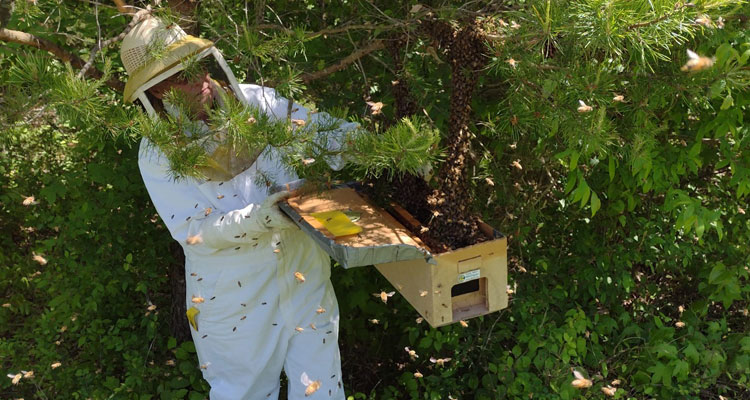
Martin’s path to becoming a “master” of the craft didn’t happen overnight. Though she always planned to keep bees, it wasn’t until she moved to Halifax County nearly 20 years ago that a late-season swarm from a “bee tree” in her yard forced her hand. She called upon Jim Zeigler, then-president of the local association, to help hive them.
While that first colony didn’t survive her initial inexperience, Martin remained undeterred. Under Zeigler’s mentorship and bolstered by a Tobacco Commission grant in 2008, she began the rigorous climb through the ranks of beekeeping—from Apprentice to Journeyman, and finally to Master. This certification process is a grueling blend of written tests, video skills assessments, and years of active apiary management.
The Rhythm of the “Super Organism”
To Martin, a honey bee colony is a “super organism”—a wild, undomesticated entity that requires a beekeeper to align their life with the rhythm of the seasons. In Virginia, this rhythm is divided into three distinct acts:
• The Buildup (Spring): A period of rapid growth where Martin observes colony expansion and manages swarming behaviors to replenish the apiary.
• The Dearth (Summer/Fall): A challenging time when nectar sources dry up because of weather, requiring Martin to closely monitor bee nutrition.
• The Winter: A season of survival where success depends on windbreaks, insulation, and the strength of food stores.
“There really is not a typical day,” Martin explains, noting that she must constantly adjust to weather patterns and the ever-present threat of pests.
The Invisible War: Varroa Mites and Habitat Loss
Being a beekeeper today is far more demanding than it was decades ago. Martin identifies the Varroa mite—an invasive parasite that acts as a vector for deadly diseases—as the single greatest challenge to colony health. Her defense is a meticulous Integrated Pest Management (IPM) plan that includes physical hive manipulations, regular mite counts, and the judicious use of treatments.
Beyond the microscopic, Martin also contends with the modern world:
• Habitat Loss: Expanding development and monoculture farming practices strip bees of their natural forage.
• Environmental Threats: Pesticides, herbicides, and an expanding black bear population all threaten the stability of her hives.
The Art of the Inspection
When Martin approaches a hive, she does so with a calm, practiced eye, understanding that personal safety and a steady hand are paramount. Clad in a protective suit, veil, and gloves, she avoids wearing fragrances that might over-stimulate the bees. Before even opening the hive, she notes the general traffic and demeanor of the colony, using a smoker or sugar water spray to mask alarm pheromones and reduce defensive behavior. Once the covers are removed, the inspection becomes a detailed evaluation of the “super organism’s” health. Martin examines individual frames to ensure the colony is “queenright,” meaning a healthy queen is present and actively producing brood. She also checks for adequate food stores, looks for evidence of pests like the Varroa mite, and assesses the temperament of the workers—noting that while Italian strains are generally gentle, others, like the Russian strain, can be famously “touchy.” If a colony is unexpectedly aggressive, she knows when to calmly leave the bee yard and return another day, perhaps even deciding to “re-queen” the hive if the bad attitude persists.
More Than Just Honey
While many associate beekeeping with honey, Barbara harvests a wealth of other products, each requiring its own specialized process. She cleans beeswax by liquifying it in hot water, harvests propolis (the “bee glue” used for repairs) by scraping it from hive walls, and even collects royal jelly using a special vacuum from produced queen cells.
The work is intensive—it takes seven pounds of honey just to produce one pound of wax—but for Martin, the effort is its own reward.
A Lesson in Calm
Perhaps the most important skill Martin has gained isn’t technical, but emotional: the ability to stay calm when things go wrong. Whether she is dealing with a “touchy” hive or an unexpected “explosion” of bee activity that requires a quiet retreat from the yard, her focus remains on the well-being of the bees and the sustainability of the backyard apiary.
For Barbara Martin, beekeeping isn’t a hobby. It is a vital bridge between our modern world and the delicate, buzzing heart of nature.